The Bamboo Lounge
American sports franchises are now in the private equity partnership, a few seem alarmed by this despite everything known about private equity.
I’m no soccer hater, like one that inevitably pops up uninvited, screaming its inferiority complex whenever there’s a particular peak in soccer interest here in the States. You sports however you want to sports. But I’m no soccer fan either. I’ve tried to get into it multiple times–like Scotch, too–and always find it’s just not my jam.
But I’m going to start this piece with a soccer story anyway.
Chelsea Football Club is one of the more historic soccer teams, I think (don’t come at me with any nitpicking here). Chelsea have not had much success of late. Chelsea are also owned by private equity groups.
Private equity, for the uninitiated, tends to be a problem for anyone who isn’t behind its investing itself. In 2018 Hamilton Nolan wrote a guide to private equity and how it might kill your company… and then the joint he published it in got killed by private equity months later, just as so many journalism shops around the country have been sucked dry by it, including the husk of the paper that I practiced learning to read as a wee one, the Chicago Tribune. Private equity vampires have destroyed hospitals without mercy or at least made them way more dangerous. A private equity firm bought the dot-org domain used for nonprofits, and those nonprofits will likely have to shell out more dough just to have a website. It feasted on the disaster capitalism of Covid. Private equity firms are making it way more expensive to rent an apartment while it’s hard enough to find one period in much of the country. “In practice, private equity firms will now be allowed to access — and skim fees off of — the $9 trillion in 100 million workers’ 401(k) plans and IRAs,” thanks to the President of the TV and his doddering predecessor. Private equity has made it much more expensive for fire departments to operate and compromised response effectiveness, including at the Los Angeles wildfires. Childcare. Books. Toys R Us. Red Lobster.
And Chelsea. The PE dudes in charge of that club ran off a coach who had pulled them out of the basement of the standings for reasons unclear yet obvious. Per Chelsea superfan Jack Crosbie of Discourse Blog:
When you translate some of this, you start to see the Private Equity of it all. [Mauricio Pochettino] was given top-down instruction from the owners that he didn’t like. The owners then criticized his methods of doing the job they’d hired him to do. The owners spent money on stuff and players that Poch didn’t ask for. This contributed to Poch’s own sense that the “Adults in the Room,” perhaps, did not actually know what the fuck they were doing. So he bounced, or they fired him, or who knows. But he’s gone. And Chelsea’s hard-won and very brief success may be going with him.
Because as we know, when Private Equity Demons force reasonable people out of their jobs, the wheels start to fall off. Or get stripped off.
Then PE turned homegrown favorites into opportunities for cash grabs. Crosbie continues…
If it’s possible to mathematically win just enough games that the team is a return on investment, or to buy enough success that everyone shuts up about the brutal backroom dealings that squeeze beloved players out, they’re going to do it. And in the meantime, they’re all so convinced that they’re the only rich smart ones in the room that they’ll blame every failure on someone down the chain. You’ve heard this story before. Most of you have lived it. I certainly have, but I wish I didn’t have to be reminded of it every time Chelsea goes down two-nil to fucking Brentford.
So if I’m no soccer fan, why should I care about this? Well, I am a fan of the major American sports leagues, and thought they had eschewed private equity involvement as investment firms grew into behemoths in the ‘80s, ‘90s, and 2000s, MLB, the NFL, the NBA, and others now allow PE investments.
The Buffalo Bills and Miami Dolphins are now 10% private equity. At the moment, no major league allows more than 30% of a franchise to be purchased by PE, and most leagues cap the number of teams a single firm can put money into.

(Source)
But it used to be zero allowance of venture capital bros getting together to call themselves a team’s owners. Now it’s a little bit. As team values have skyrocketed this century, getting a slice of one has only become more and more attractive.
And while none of these firms can currently get majority ownership of a team, who’s to say that doesn’t change in this era of oligarchy and kleptocracy that we find ourselves in? And if they are allowed to lean on others in positions of influence and inch their way into chumminess with the classic crusty curmudgeonly owners and convince them that, “Hey, pal, this will be a good thing, trust me,” just as they have convinced so many other businesses to take on Paul Cicero as a partner.
Maybe this cuts the knees out of any future claim a traditional team owner, hat in hand, makes about needing public funds for a new stadium–you have private capital at the ready now, bruh–but the trade-off then becomes a focus on “smart venues” and the franchise becoming the landlord of a certain radius around a stadium, a la the new Wrigleyville (the private investment firm Arctos owns a piece of the Chicago Cubs, by the way, which team chair Tom Ricketts admitted in the same week that he said the team tries financially to “break even” every year).
Even so, nothing good comes from inviting the vampire into the house, and that vampire is now stretching out on the couch in the cozy back room of major American sports. Even more troubling is that not many sports fans seem to be worried about this (if they’re even aware). The leagues have willingly accepted a lamprey on their thighs because what’s the worst that can happen, right? PE dudes have just a silent role in any NFL ownership. For now. Investment firms never stay silent for the duration of their involvement. The PE world is already talking about influencing teams, and while not currently having voting power, as the management consulting company PricewaterhouseCoopers excitedly notes,
they would have common shares — and potential indirect influence. . . . In Europe, many PE firms have acquired majority stakes in clubs, allowing them control over strategic and operational decisions. . . .
US dynamics are distinct, however, due to regulatory and league restrictions. For instance, in the NFL, PE firms can own only up to 10% of a team, while other major leagues permit up to 30% ownership. While this limits direct control over team operations, PE firms can still exert substantial influence. Despite these restrictions, we’ve observed that US PE firms can shape strategic outcomes. Collectively, they could hold roughly a quarter of all US sports franchise equity if they increase their buying potential. Private equity firms' collective exits or decisions to sell underperforming sports holdings could significantly impact league economics and team valuations. The NFL has mitigated this risk with a minimum six-year holding period before sales, but, to our knowledge, no other leagues have this stipulation.
PE groups don’t talk publicly about desiccating journalism and saddling your favorite retail store with enough debt to kill a team of oxen. They talk like the above, about “gaining control of strategic and operational decisions” and “exerting substantial influence,” or they don’t talk publicly at all. Until suddenly they’re loudly holding not just a quarter of all American sports franchise equity.
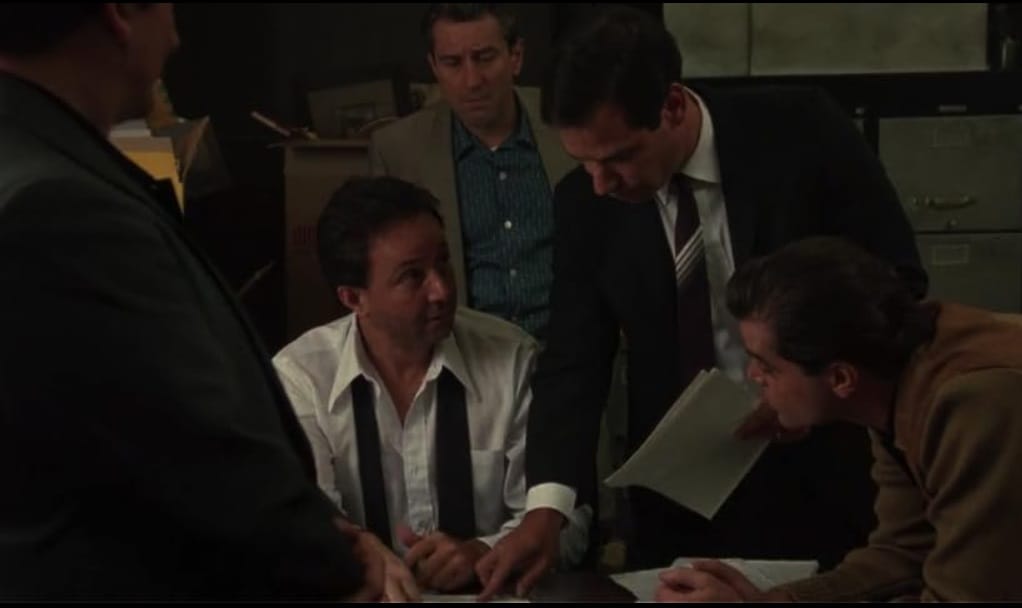
Then down the line we all end up with that hangdog look of Sonny Bunz, the now-former owner of the Bamboo Lounge, mumbling and cursing what a shame it all is that one or more of our favorite football, baseball, basketball, and even American soccer teams are now Chelsea. Or worse.