Sharing the revenue of madness
May is the month I most identify with labor. Recognizing the history of Americans who have fought for workers’ rights on May Day, celebrating the most important unpaid job of all–moms, and the parades of worker ants constantly marching through my home puts the month ahead of September, which has the literal Labor Day.
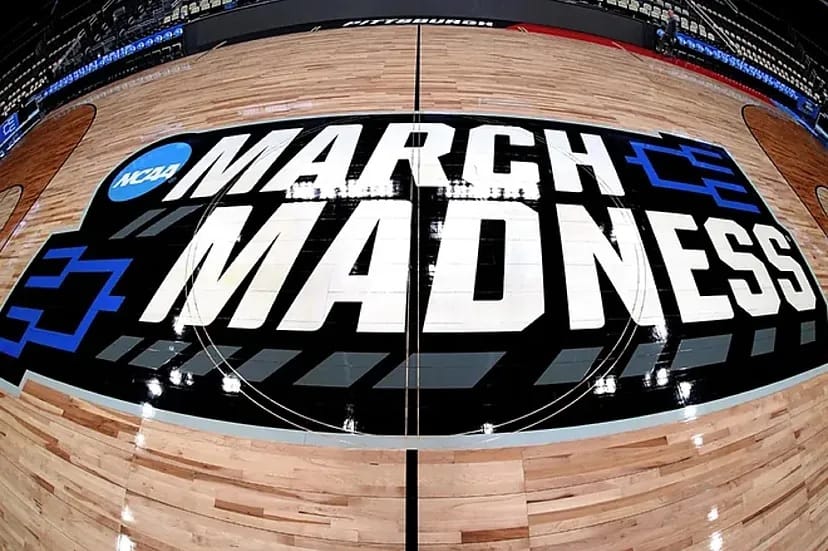
March, a month more about rebirth and pulling ourselves out of the doldrums of literal and figurative winter, should be in the discussion, too. As the annual NCAA men’s and women’s basketball tournaments launch this week, they will feature athletes who, for the first time, can be argued from a documented legal sense as employees. March Madness alone makes the NCAA about $1 billion annually, and that’s at least 80% of the revenue for the behemoth nonprofit. This has always been predominantly because of the work of several hundred basketball players each of 86 and 43 years that the men’s and women’s tournaments have been held respectively, almost all of it unpaid for them.
Now, though, the landscape of college sports has changed. Name-image-likeness deals have brought “amateur” athletes the opportunity to profit from their celebrity generated by the popularity of events like the tournaments. Per the House vs. NCAA ruling last October that is set for final approval in early April, schools are now able to compensate their athletes to the tune of upwards of $20 million, though Division 1 schools not from power conferences can opt in for smaller compensation. In what their attorneys call “an intergalactic paradigm shift” in college sports, “101,935 [current or former college athletes] had either filed a claim form or updated their payment information, which gives them a chance to receive a portion of the nearly $2.8 billion to be divvied among those who played before the NCAA approved name, image and likeness deals in 2021.” As schools’ lawyers print up contracts, though, they bear a striking resemblance to traditional employment agreements.
The contracts “cross those red lines very clearly,” said Michael LeRoy, a law professor at the University of Illinois who has researched employment law in the context of college sports for more than a decade. “It's employment on its face. There's no masking it” . . .
LeRoy, who reviewed several contracts obtained by ESPN, said the deals meet several key standards in a legal test that federal courts have established to determine if someone is an employee. As they roughly defined, an employee is someone performing services for another party's benefit in exchange for compensation while under that party's control.
Sure sounds like the players in this year’s tournaments who have NIL deals with their schools meet that employee criteria, no? "These are employment agreements based on payment in exchange for play," sports attorney Darren Heitner told ESPN.
So watching the tournaments this year will allow me to be a bit more free of guilt that I’ve had the last few years as I filled out a bracket and sought myself to maybe make a few bucks from the madness. NCAA sports as a labor issue has been one of those angel/devil on opposite shoulders things that you can’t unsee once you’re aware of it (sort of like football and head injuries) but is easier to tamp down to the unconscious during the games themselves. In 2022 college players were allowed to start signing endorsement deals, and now those players are mere weeks away from the work they do this month being eligible for school-sanctioned compensation, even if those schools are still not admitting to being their employers.
Even an actual athletic director has recently pointed to one of the great systemic hypocrisies long held by not previously allowing college athletes to get a piece of the massive revenue they generate.
"As a capitalist, I'm not quite sure we should ever restrict anything like that," said Virginia Commonwealth University athletic director Ed McLaughlin regarding tuition being sufficient compensation for the work that athletes put in on the fields and courts. "We're certainly not restricting coaches. So I don't know why we'd hold the kids to a higher standard than we do the adults.”
And, yeah, the college athlete-as-laborer situation has not been entirely smoothed out as of now. Women athletes are still getting a much shorter end of this stick with the President of the TV nullifying a prior Title IX equal NIL pay directive. The suits who do nothing for the games themselves are still going to receive a disproportionate piece of the piece even with men’s sports. But we’ve crossed a line of demarcation from the days of these tournaments being just about try-hards performing for the love of the game.
So this is March. It’s now a month to celebrate more than just the madness.