Outdated and somewhat unreasonable
Trimming the Yankees hair policy is overdue but necessary, and it’s a tiny bit of anti-authoritarianism in a time where such is desperately needed.
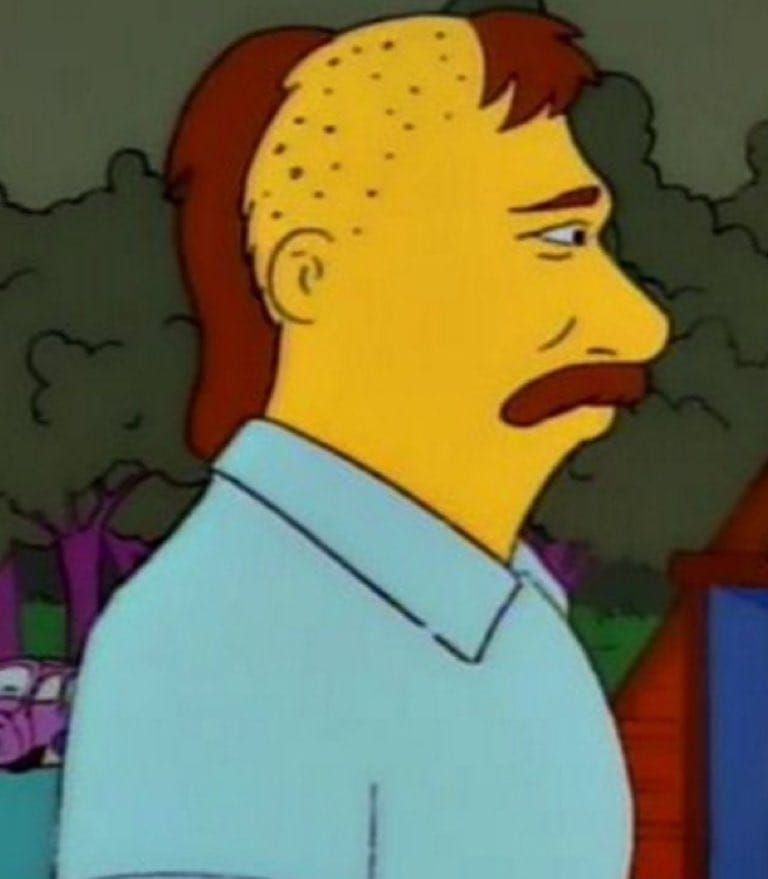
It can be partially chalked up to the subpar acting chops* of the typical pro athlete, but what has always stood out to me about Don Mattingly’s purpose in the legendary “Homer at the Bat” episode of The Simpsons is how muted his character is in response to Mr. Burns’ tyrannical dictum about Mattingly’s non-existent sideburns. This is a man who responds to his boss like a jaded high school sophomore being scolded in the hallway for some minor violation of school policy and, after repeated tongue-lashings, overcompensates in a way that angers authority even more because the directive given him left enough “screw you” room to plow through his head left to right with a lawnmower.
Mattingly’s final line of liking Burns better than Yankee owner George Steinbrenner is not just a poke at the latter but an admission that he’s real-life main job is one where, while nationally famous, he must still be subject to the whims of an authoritarian employer.
The episode was written by John Swartzwelder, a bird so odd that he “was granted a special dispensation and allowed not to attend rewrite sessions with the rest of the staff, instead being allowed to send drafts of his scripts in from home so other writers could revise them as they saw fit” because he supposedly smoked too much for other writers’ liking in 1992, and when he could no longer smoke in his preferred coffee shop booth where he did all his subsequent writing, he bought a similar booth and installed it in his house. To scan Swartzwelder’s Simpsons episode credits, pattern of anti-authoritarianism and subtle pro-worker themes emerge. Unlikely on Mattingly’s part but more likely intentional from the writer is the message, wrapped in exaggeration, that Burns’ hair policy is not only draconian and arbitrary (and only applied to Mattingly, a New York Yankee at the time who had been sat out of a game the previous season for not cutting his hair) but modernly paternalistic as well.
Thirty-three years and one day after being mocked in front of a TV audience larger than that evening’s Winter Olympic coverage and The Cosby Show, the Yankees have decided to modify the longstanding facial hair policy, now allowing “well-groomed beards” where before no facial hair was allowed save mustaches (which, like, why some facial hair but not–whatever, best not to even seek to find the logic). The policy was implemented in 1976 by George Steinbrenner, not coincidentally shortly after the peak of counterculture in America. It should be noted that while no MLB player was known to have sported even a mustache for about 35 years prior to 1970, the players who first bucked the trend were people of color–Dick Allen of the Philadelphia Phillies and Felipe Alou of the Oakland A’s, who both wore mustaches in 1970, and while the players whose appearance sparked Steinbrenner’s reaction were all white, the players vocally against it ever since seemed to be disproportionately African American, from Oscar Gamble to Andrew McCutcheon, who specifically cited a neutering of individuality after moving on from the Yankees, to Devin Williams, who is receiving due credit for helping end the team policy.
Steinbrenner at the time defended the rule immediately, even while it was met understandably with rancor from multiple players:
I have nothing against long hair per se. But I'm trying to instill certain sense of order and discipline in the ball club because I think discipline is important in an athlete.
They can joke about it as long as they do it. If they don't do it, we'll try to find a way to accommodate them somewhere else. I want to develop pride in the players as Yankees. If we can get them to feel that way and think that way, fine. If they can't, we'll get rid of them.
This is classic “because I said so” and “my way or the highway” ethosbabble, a Cool Hand Luke imposition to get the property’s minds right, and the Yankee owner certainly viewed on-field personnel as his property.
Steinbrenner was a military man, and sports was well into its conflation with militaryspeak by the mid-70s, and “order and discipline” certainly relate to that, but these were/are adults, and obviously no grownup is performing their job better or worse because of their hair or if they are wearing a necktie or earrings of a certain length, nor is any greater sense of pride–another uber-vague term used by authoritarians to mask a real desire for strict conformity and broken individuality–instilled with such a policy in anyone but other sadists (and racists, in the case of a similarly-motivated defunct NBA dress code). To impose such a policy is to infantilize grown men in order to cast a specter of knowing one’s role always.
The Yankees hair policy was always about letting a workforce know it was subservient to its bossman. Independent of anything performance-related, it was a communiqué to the world that to work for me is to be owned by me and my arbitrary rules, and you will be jettisoned and labeled a “problem” should you resist.
Yankees chairman and George’s son, Hal Steinbrenner, referred to the now-former policy as “outdated and somewhat unreasonable” upon making the change, and to his credit gathered input from current and former players before modifying (but not totally eliminating) the hair policy (players still are not allowed long hair). Power concedes nothing without a demand, which Williams, a new Yankee, had made to get the ball rolling on the change. But it’s still just a concession.
Still, trimming the policy is overdue but necessary, and it’s a tiny bit of anti-authoritarianism in a time where such is desperately needed.
*Is that a pun so bad it makes your eyes groan as they roll? I will neither confirm nor deny.