Looking away to look for
The awful feeling for the loss of life is compounded by bracing for the ensuing four years microcosmed in these two reactions.
Despite what some of our greatest action thrillers would have us believe, a commercial plane crash in America is exceedingly rare. Such is a comfort to regular air travelers numbering in the tens of thousands at least in this country, but it’s a cold comfort in the immediate aftermath of the crash that occurred over the Potomac River on Wednesday evening, killing all onboard an American Airlines flight that collided with a Black Hawk helicopter midair.
Several of the passengers on the plane were from the figure skating community, particularly the Skating Club of Boston, returning from a competition in Kansas, probably with that annoyed feeling we’ve all had as we get closer to our destination, wishing time would speed up so we could be in our own beds that much sooner. And then a flash, a terror, and gone.
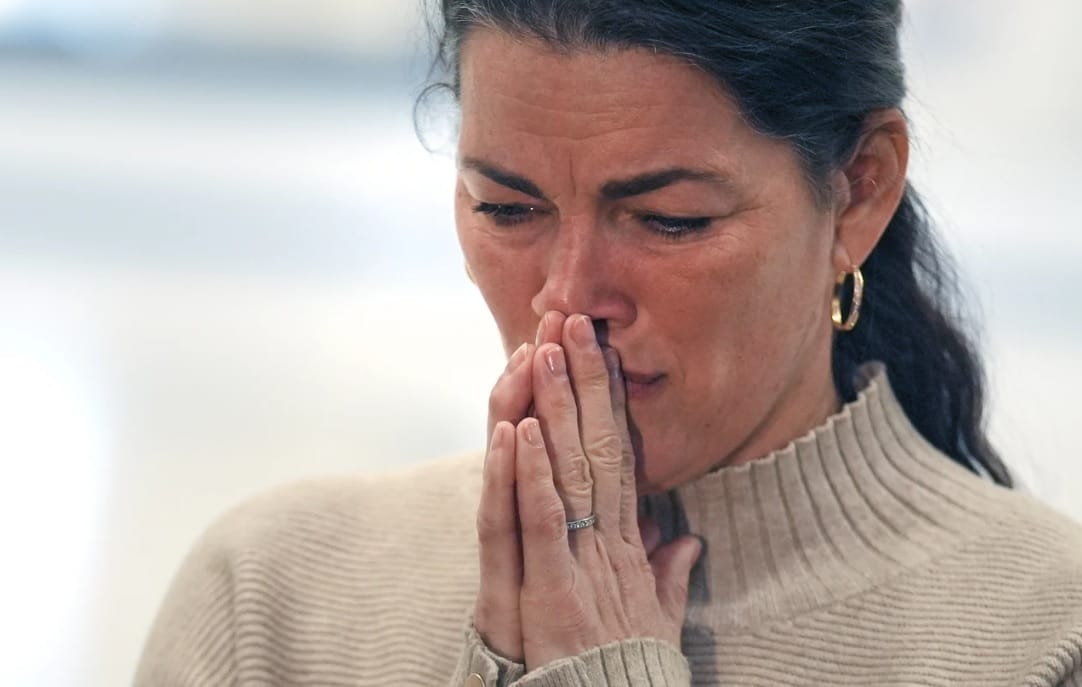
It’s difficult to watch Olympian Nancy Kerrigan speak about those lost, some she knew personally at the Skating Club of Boston. Not just the tears but the helplessness, the instantaneous attempts to process and self-reassure while speaking about something so unnatural that the brain struggles under the weight of attempting to express the nonfiction of something that is just supposed to be in the movies.
Olympian Nancy Kerrigan reacts to figure skaters killed in D.C. plane crash:
— NBC News (@nbcnews.com) 2025-01-30T20:48:54.042Z
Excellent in their simplicity, the words of Fred Rogers regarding watching a tragedy unfold have always stuck with me, regardless of them being meme-ified and used to passively participate in the unfortunate. Some have criticized the advice as advice for children misapplied if swallowed by adults, but I see it as valuable for anyone overwhelmed by something horrible, and I would believe–based on everything Mr. Rogers communicated for years on his program for kids about empathy and being helpful–that he meant not just to look for helpers in order to have hope but to channel that inspiration into being a helper oneself as best one can.
There were immediate helpers in the Potomac after that crash, braving frigid waters in an attempt to save anyone, though it was just not possible to do so. Beyond that, in times like these the public looks to its esteemed public officials to be helpers by communicating clearly and compassionately, offering assurances and plans. Unfortunately, on a federal level there were no helpers to be seen.
D.C.’s airport is one of only two run by the federal government, so Congress gets a say in how it’s run. In 2023, there was legislation proposed by Republican representatives fed airline lobby cash to increase flights at Ronald Reagan Washington National Airport there. The bill failed but found a new form a year later, followed by warnings from critics that the airport was too packed with flights and dangerous near-collisions in 2023 and 2024 were harbingers of something worse.
Turning to the President Of The TV in hopes he would comfort America on the TV that he loves to be on regardless of circumstances, nothing resembling a helper appeared (except for maybe some Taco Helper on that pumpkin, amiright, folks?). For over a half hour he cast blame on predecessors and on DEI so unfounded it bordered on parody, while bodies were still in the river.
REPORTER: I'm trying to figure out how you can come to the conclusion right now that diversity had something to do with this crash. TRUMP: Because I have common sense, ok? And unfortunately a lot of people don't
— Aaron Rupar (@atrupar.com) 2025-01-30T16:54:34.650Z
Last week he had coincidentally fired “the heads of the Transportation Security Administration and Coast Guard before their terms are up and eliminated all the members of a key aviation security advisory group,” but it was an ersatz slur he chose to push instead the morning after a deadly calamity.
It wasn’t exactly surprising. Rafi Schwartz explains (emphasis his):
It is a defining characteristic of Donald Trump and his crew that nothing is ever their fault. That’s no surprise. And, despite the conspiratorial rumblings on whatever your social network of choice might be, there’s no evidence whatsoever (yet, at least) that any of Trump’s hiring/firing decisions were what caused last night’s crash. Sure, it’s NOT GOOD that the secretary of defense is an abusive drunk, or that the transportation secretary is a cheese headed buffoon. And it’s similarly NOT GOOD that Elon Musk was able to harass the FAA chief out of office last week for not being nice enough to SpaceX for his liking. These are unquestionably bad developments for a million reasons, most of which are too obvious to bear mentioning. But are they the reason a passenger plane and a helicopter slammed into each other in one of the busiest airspaces in the country? Well, we just don’t know.
But this is where things get tricky. Because while it’s not immediately helpful — and quite possibly will end up being straight-up factually incorrect — to blame Trump’s machinations for the disaster itself, it is crucial to remember that he is responsible for what happens now. And what’s happening now is that this latest configuration of inept bigots is capitalizing on the disaster to foment racism and discord for their own advantage.
And I keep thinking of Nancy Kerrigan’s response–wrecked, lost, grieving skaters she knew, some of them children, the other passengers, and the three soldiers, now gone in some unfortunate combination of human error that cannot have an immediate accurate explanation–juxtaposed with the authoritarian response at the podium that same day in the aftermath. The awful feeling for the loss of life is compounded by bracing for the ensuing four years microcosmed in these two reactions. People wrecked, lost, grieving what will be loss of life from myriad executive decisions--sometimes people in the sports world, sometimes kids--and knowing that to look for the helpers will mean to look away from the accusatory voice perpetually fixed on the TV and the scroll.
Perhaps inward. If we’re up to it.